
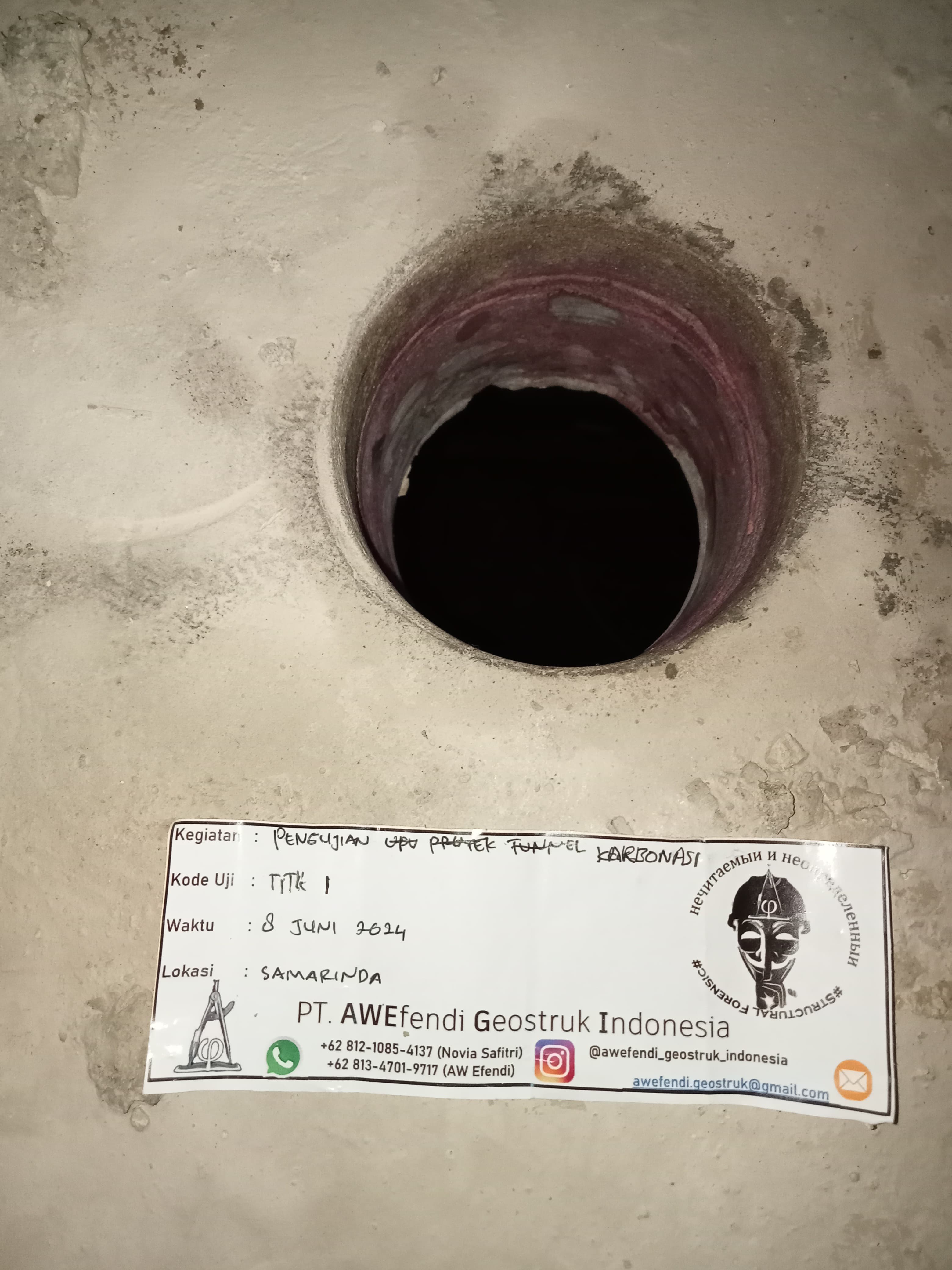
Concrete Carbonation Test
$60.00
Concrete carbonation is a natural and gradual chemical process that occurs when carbon dioxide (CO2) from the atmosphere penetrates the pores of concrete and reacts with the calcium hydroxide (Ca(OH)2) in the cement paste. This reaction forms calcium carbonate (CaCO3) and water, which effectively lowers the concrete's pH from a highly alkaline state (typically a pH of 12-13) to a more neutral one (a pH of around 8-9).
The high alkalinity of new concrete is crucial because it creates a protective "passive" layer on the steel reinforcement (rebar) embedded within it, preventing corrosion. When carbonation reaches the depth of the rebar, this protective layer is destroyed. This makes the steel vulnerable to rust, which can lead to expansion, cracking of the concrete, and a loss of structural integrity.
The Carbonation Test Procedure
The carbonation test is a simple, quick method to determine the depth of carbonation in a concrete structure. The most common and effective method is the phenolphthalein test.